
Every Day We Fight Rifter leaders guide: Boss Battles and Loop Progression
Every Day We Fight Rifter leaders are heavily armored bosses that control the temporal loop. Defeating them shifts your timeline forward, advancing the war effort and unlocking closer respawn points across wartorn city districts during repeat runs.
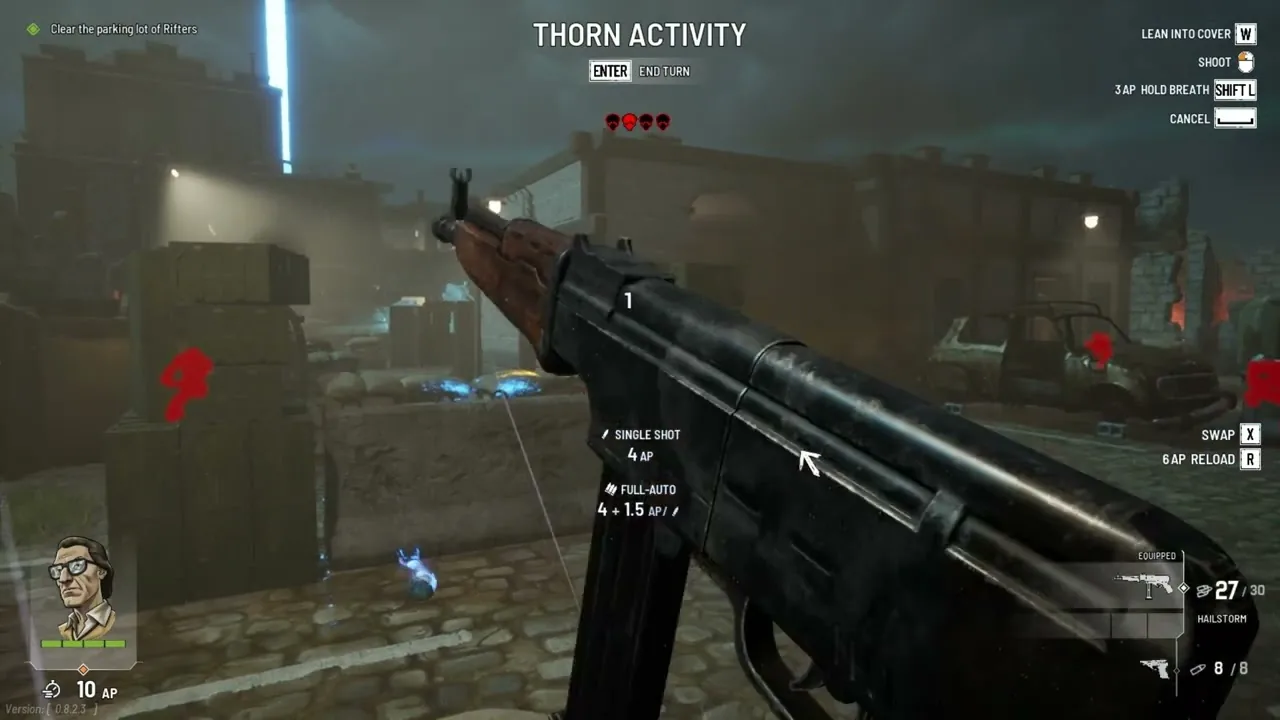
Every Day We Fight Rifter leaders are heavily armored bosses that control the temporal loop. Defeating them shifts your timeline forward, advancing the war effort and unlocking closer respawn points across wartorn city districts during repeat runs.
Role of Rifter Leaders in Loop Progression
Rifter leaders represent the command tier of the alien occupation forces in the city dome. In Every Day We Fight, eliminating these heavily armored adversaries acts as the primary catalyst for temporal progression. When a resistance run ends in squad defeat, the team resets to earlier checkpoints such as the shoreline. Defeating a leader like Carg alters the timeline anchor, allowing the squad to awaken further into the day at locations closer to objectives, such as the bridge leading to the Faber Labs facility.
Each victory over a leader moves the overarching war forward. Discovered items, unlocked skills, and base gear pool upgrades persist between loops. For broader progression rules and reset behavior across city districts, consult the time loop guide to track how map checkpoints evolve.
Boss Combat Mechanics and Encounter Rules
Engagements against Rifter leaders combine turn-based action point allocation with real-time reactions and manual ballistics. Damage calculation relies on direct physical contact rather than flat statistical dice rolls. Players activate direct aiming to manually align sights with weak points, such as exposed heads or unarmored limbs, while accounting for cover geometry and firing obstacles.
Specific combat systems govern each leader confrontation:
- Action Point Conservation: Combatants spend action points on running, firing, reloading, and holding breath. Up to five unspent action points carry over to the subsequent turn, providing surplus energy for rapid positioning or sustained shooting during decisive phases.
- Reaction Windows and Scramble: Placing an overwatch cone expends both action points and reflex actions upfront. Maintaining remaining reflex actions allows units to trigger scramble to dash into adjacent cover when caught in enemy firing arcs.
- Environmental Hazards: Combat zones contain destructible elements, including fuel canisters and abandoned vehicle gas tanks. Targeting these canisters with ranged fire triggers explosions that clear structural obstacles and damage clustered hostiles.
- Post-Combat Detonations: Defeated leaders remain dangerous after their health depletes. Certain leaders explode upon death, requiring nearby fighters to clear the immediate radius before the final cutscene triggers.
- Armor Objectives: Specific story encounters require targeting and stripping specialized armor components rather than applying direct lethal damage, in accordance with active tactical mission objectives.
Tactical Roles Against Armored Bosses
Confronting high-tier alien leaders requires coordinating the distinct abilities of Dylan, Vivian, and Leopold. Each resistance member fills a dedicated combat role with specific point requirements.
| Resistance Member | Tactical Role Against Leaders | AP and Resource Cost |
|---|---|---|
| Dylan | Applies melee proximity punches, taunts boss attention away from injured allies, and delivers shotgun blasts at point-blank range | Spends high movement AP to close distance, exposing himself to direct retaliation |
| Vivian | Delivers precision sniper rifle damage to weak points and executes kill assists from elevated exterior positions | Consumes AP to hold breath for accuracy and expends eight AP per single-round rifle reload |
| Leo | Establishes overwatch cones with automatic fire, suppresses flanking minions, and donates AP to frontline allies | Consumes reflex actions upfront and transfers ten personal AP directly to a squadmate |
Pre-Combat Positioning and District Heat
Approaching a leader arena demands tactical preparation before initiating combat. Splitting the squad during real-time movement allows players to set up wide crossfire angles around parking lots and hotel courtyards. Utilizing stealth keeps fighters outside alien detection radiuses, preventing enemies from taking immediate initiative.
District engagement history influences encounter difficulty. Clearing optional street skirmishes raises the squad heat level. Crossing heat thresholds prompts the alien forces to deploy tougher guardians, engineers, and additional reinforcements into the arena alongside the leader. Squads must balance their equipped weapons—ranging from close-range shotguns to high-caliber rifles like the Long Haul—to maintain enough firepower and ammunition capacity to survive both the boss and accompanying waves.